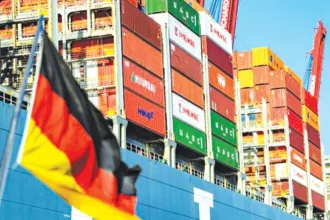

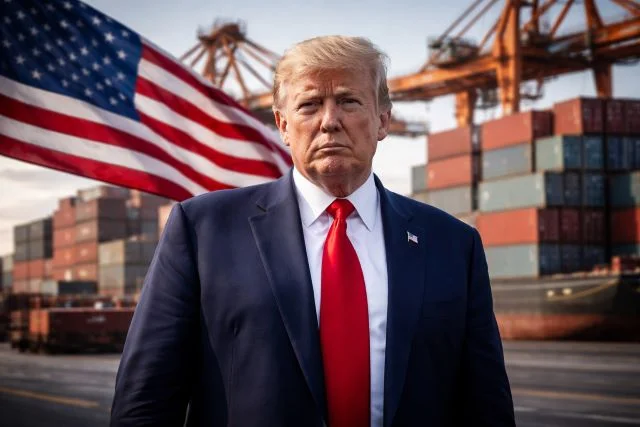
Donald Trump swiftly unveiled a new 10% global tariff on imports, days after the U.S. Supreme Court delivered a major legal setback by ruling his sweeping international tariff regime illegal, underscoring a renewed flashpoint in global trade policy that could reverberate across markets and diplomatic channels.
On Feb. 20, the Supreme Court held that Trump had exceeded his constitutional authority by imposing broad import taxes under the International Emergency Economic Powers Act (IEEPA), a decades-old sanctions statute, saying that only Congress has the power to levy tariffs in peacetime. Chief Justice John Roberts, writing for the majority, emphasized that the Constitution’s taxing power resides with the legislature, dealing a stinging rebuke to a signature policy of Trump’s second term.

Almost immediately after the ruling, Trump signed a new executive order to place a temporary 10% tariff on imports from nearly all trading partners, effective Feb. 24 and lasting 150 days unless extended by Congress. The White House described the measure as a stop-gap tool to maintain what it called “fair” trade treatment while preserving American jobs.
“We will continue to fight for American workers and American industry,” Trump said in a social media post late Friday. “This new tariff ensures that we stay strong and that our trading partners play fair.” He also said the move would help reduce long-standing U.S. trade deficits and provide revenue to the U.S. Treasury.
The Supreme Court’s ruling centered on Learning Resources, Inc. v. Trump, a case that consolidated legal challenges from importers and small businesses asserting that the president’s use of IEEPA to impose tariffs was unlawful. The majority held that the statute did not authorize the executive to set taxes on imports, and that doing so without clear congressional delegation violated constitutional separation of powers.
Also read: Trump Unveils Japan’s $550B US Investment
The court’s decision invalidated most of Trump’s earlier broad tariff measures, which included two-tiered systems announced in 2025, starting with a baseline 10% duty on imports from virtually all countries and higher “reciprocal” levies that reached as much as 50% for nations with which the U.S. ran large deficits. Those earlier tariffs, nicknamed “Liberation Day tariffs,” had already prompted global unease and legal challenges.
Trump’s abrupt policy reset leaves the global trading system in uncharted territory. The new 10% duty replaces more punitive rates agreed under interim trade deals with key partners. For example, India’s previously negotiated 18% tariff under an interim framework was reset to the 10% baseline, offering temporary relief to Indian exporters but raising questions about the durability of bilateral accords.
Global and domestic reactions were swift and mixed. European and Asian trading partners expressed concern that continued tariff uncertainty would disrupt supply chains and investment plans. Taiwan’s cabinet said Thursday it was monitoring developments closely, while French officials indicated they would assess the implications for European exports to the United States.
Business groups, including importers and manufacturers, have warned that broad tariffs raise costs for American consumers and industry. A coalition of more than 800 U.S. small businesses, known as We Pay the Tariffs, has demanded refunds for billions of dollars paid under now-struck tariffs, arguing the taxes were unjust and harmful to their operations. Trump, however, dismissed refund calls as unlikely and said the administration would focus on enforcing the new duty.
In Congress, reactions split along partisan lines. Several Republican lawmakers signaled support for Trump’s objectives but urged cooperation with legislators to craft a more legally sustainable trade framework. Democrats and consumer advocates welcomed the Supreme Court’s check on executive overreach but cautioned that tariffs, regardless of legal authority, could inflate prices for U.S. households and slow economic growth.
Analysts said the episode highlights growing tensions between presidential trade initiatives and constitutional checks and balances, especially as the U.S. grapples with trade imbalances and geopolitical competition. They also noted that Trump’s tariff strategy still leaves room for other statutory tools such as investigations into unfair trade practices and national-security tariffs to shape U.S. trade policy going forward.
With this dramatic policy pivot, the Trump administration is thrusting global commerce back into an era of heightened tariff risk, raising the stakes for exporters, negotiators and markets around the world as uncertainties intensify ahead of possible legislative or judicial follow-up in the months ahead.