
A pilot project by clean-tech company Viridis has successfully treated and clarified multiple streams of textile wastewater in Bangladesh, one of the world’s largest garment manufacturing hubs, marking a step forward for sustainable water reuse in the industry.
Bangladesh’s textile sector, a cornerstone of its economy and a major global supplier of apparel, generates vast volumes of wastewater each year from dyeing and finishing processes. The effluent is often heavily colored and chemically complex, posing environmental challenges in a country already under pressure from water scarcity and pollution.

Viridis deployed its electro-oxidation pilot unit at a large textile factory outside Dhaka to test whether the technology could break down color and contaminants in real production wastewater. The project covered six distinct wastewater streams from three textile plants, each operating at an industrial scale.
“This wasn’t a laboratory simulation. It was live production water, with real operational constraints and expectations,” said Cataldo, who leads the company’s water innovation efforts.
Electro-oxidation uses electricity to trigger chemical reactions that degrade pollutants at a molecular level. According to the company, the process does not rely on large volumes of added chemicals and can be integrated into existing treatment systems.
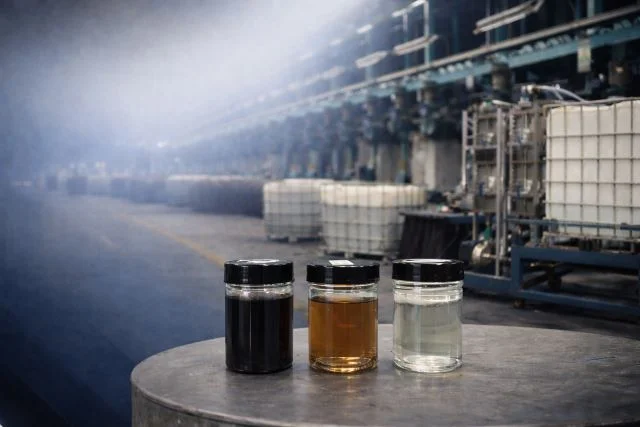
During on-site trials, engineers treated each wastewater stream sequentially. Factory teams observed as the dark, dye-laden water gradually lightened in color and clarity. By the end of the pilot, all six streams had been successfully treated to visibly improved quality, demonstrating the system’s ability to handle varying effluent compositions.
The goal, Cataldo said, was not only to meet discharge standards but to show that textile mills can treat and potentially reuse wastewater on-site in a scalable and cost-effective way. Water reuse is increasingly viewed as critical in Bangladesh, where groundwater depletion and river pollution have become growing concerns.
Industry representatives involved in the pilot also shared operational data on treatment costs, sustainability targets and integration requirements, helping assess how the technology could be deployed with minimal disruption to production.
Also read: Denim Solutions Rolls Out Safer PP Substitute as Industry Shifts to Green Washing
The pilot’s performance exceeded expectations, Cataldo said, and discussions are now underway regarding the installation of a permanent unit.
Bangladesh is the world’s second-largest apparel exporter, and international brands are under mounting pressure to reduce the environmental footprint of their supply chains. Technologies that enable wastewater treatment and reuse within factories could help mills cut freshwater intake, reduce pollution, and meet tightening environmental standards.
“There is still much work ahead,” Cataldo said. “But this shows that cleaning and reusing textile wastewater at scale is not just an aspiration. It is achievable.”
If rolled out more widely, such systems could contribute to reducing the environmental impact of one of the world’s most water-intensive industries while safeguarding a resource that remains critical to communities and economic growth alike.