
Global apparel demand in early 2026 is being reshaped by consumers who are prioritizing comfort, strong value and verified sustainability, according to the latest retail data and industry analyses, pushing brands and textile suppliers to adjust product mix, sourcing strategies and pricing models.
Recent consumer surveys indicate that sustainability has firmly entered the mainstream. Research from multiple global consultancies shows about 70 percent of consumers now consider environmental impact when buying clothing, while roughly half say they are actively trying to reduce fast-fashion purchases. This shift is translating into measurable material demand. Textile Exchange data shows recycled polyester already accounts for more than 14 percent of global polyester fiber production, up sharply from single-digit levels earlier in the decade, and brands continue to increase usage targets.

Comfort-led apparel remains the strongest-performing category. Market trackers estimate the global athleisure segment is growing at a compound annual rate of around 7 to 8 percent through the mid-2020s, outpacing overall apparel growth. Retail sell-through figures from major Western markets show knit tops, stretch bottoms and relaxed silhouettes consistently outperform structured formalwear. Hybrid work patterns continue to support demand for versatile clothing that can transition between home, office and travel environments.
At the same time, consumers remain highly price conscious. McKinsey’s latest State of Fashion analysis notes that more than 60 percent of shoppers in key markets report trading down or seeking discounts in 2024–2025, a behavior that has carried into early 2026. Private-label apparel is benefiting from this shift, with some retail studies showing store brands now capture roughly one-third of apparel unit sales in value-focused segments.
Rather than simply buying cheaper products, many consumers are consolidating wardrobes. Industry data shows growing interest in what retailers describe as elevated essentials—durable T-shirts, core denim, knitwear and layering pieces designed for multi-season use. This “buy fewer, buy better” pattern is supporting stable average selling prices in certain mid-tier categories despite broader economic pressure.
Digital commerce continues to accelerate these changes. Global e-commerce apparel penetration has surpassed 50 percent of total fashion purchases in several developed markets, according to retail analytics firms, with mobile devices generating the majority of traffic. Social media platforms are shortening trend cycles dramatically. Viral products promoted through short-form video can now reach peak demand within weeks, forcing brands to compress development timelines and increase supply chain agility.
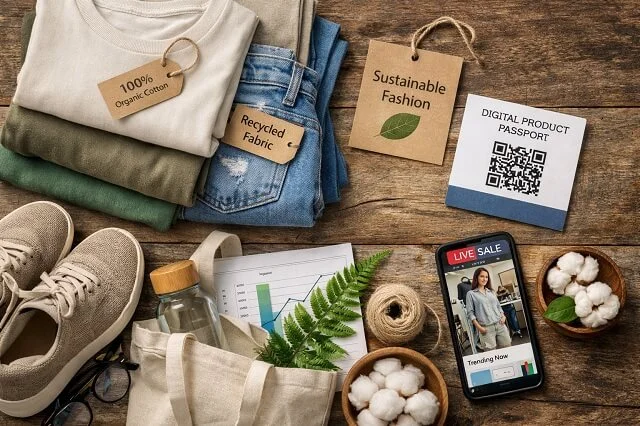
Transparency is becoming a decisive purchase factor. Surveys in Europe show more than 40 percent of consumers check sustainability labels or product origin information before buying apparel. This has prompted growing adoption of digital product passports, QR-based traceability and fiber disclosure programs, particularly among brands selling into the European Union ahead of tightening regulatory requirements.
Also Read: Richest 1% Emissions Threaten Textile Climate Goals
Personalization is also gaining measurable traction. Data from print-on-demand platforms indicates double-digit annual growth in customized apparel orders, driven largely by Gen Z consumers who value individuality and limited-edition drops. Retailers report higher engagement rates and lower markdown risk on small-batch, targeted collections compared with traditional mass inventory.
Inclusivity trends continue to expand. Market research shows the extended-size apparel segment is growing faster than the overall clothing market, with some estimates projecting high single-digit annual growth through the decade. Gender-neutral collections are also expanding shelf space across global retailers, reflecting shifting consumer attitudes toward fit and identity expression.
Technology-enabled apparel, including smart textiles and wearable-integrated garments, remains an emerging but closely watched segment. While still concentrated in sports and performance categories, the global smart clothing market is projected by several analysts to grow at double-digit rates over the next five years, suggesting longer-term potential.
For major sourcing hubs such as Bangladesh, Vietnam and India, the data points to a more complex buyer landscape. Global brands are increasingly requesting certified sustainable materials, smaller and more flexible production runs, and faster replenishment capabilities. Lead-time reliability and traceability compliance are becoming critical vendor selection criteria alongside cost competitiveness.
With the first quarter of 2026 underway, the convergence of comfort, value and sustainability is clearly shaping apparel demand worldwide. Industry analysts expect these three factors to remain tightly interconnected, with brands that successfully balance affordability, wearability and verified environmental performance best positioned to capture growth in the evolving global fashion market.